(02) The Context
The problem
- One shopping experience that works across countries.
- Payments that just work for a very mixed customer base.
- Frontend, backend and payments designed as one system.
(03) My Role
My contribution
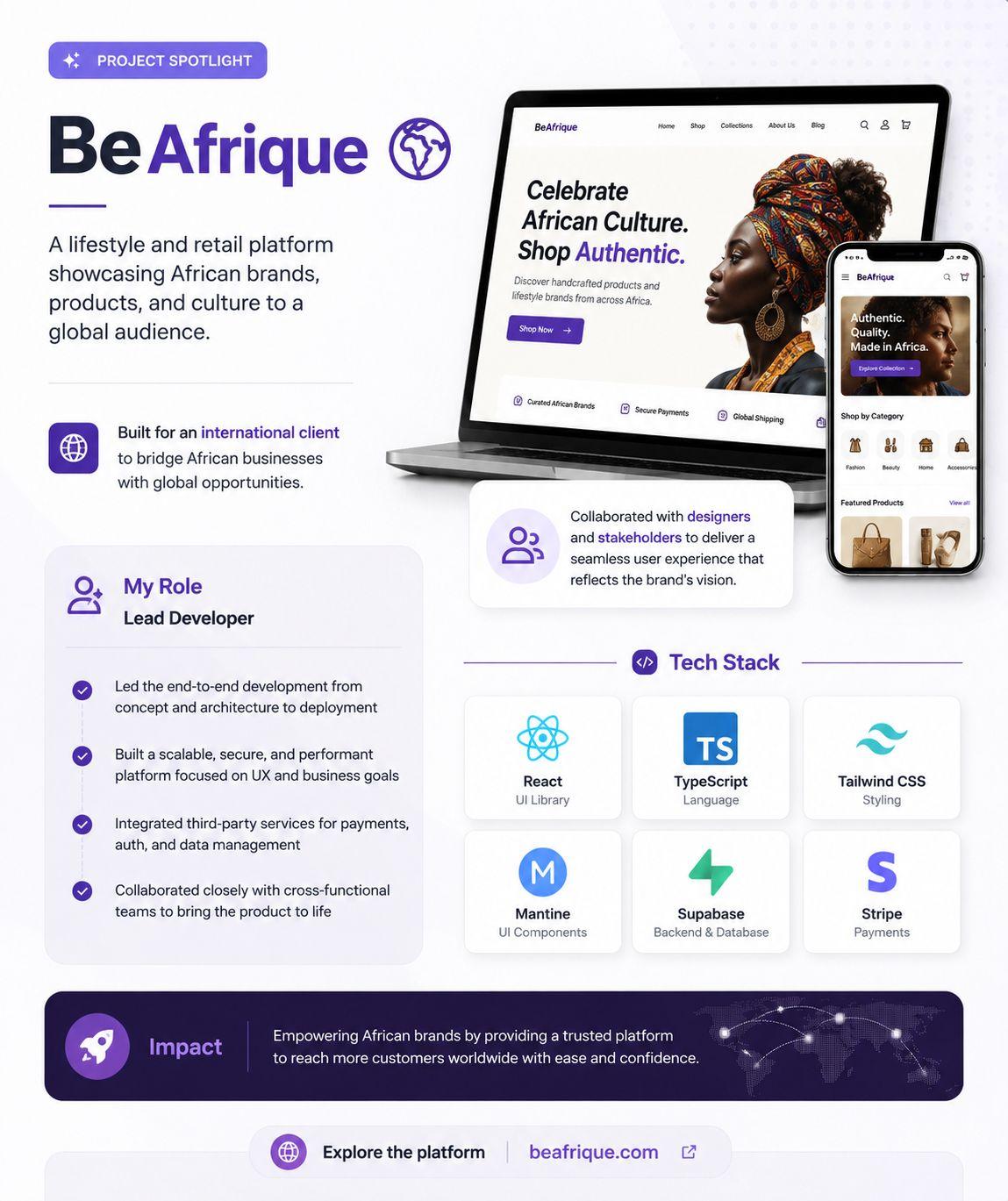
- Built the customer-facing e-commerce experience — responsive product and shopping interfaces with React
- Implemented the user journey from product discovery through checkout
- Built the backend functionality required to support the platform
- Connected the frontend with the application's data and services
- Supported the e-commerce and order flow
- Integrated Stripe into the platform and implemented the payment flow for customers
- Tested the payment integration to ensure payments could be processed correctly
(05) The Engineering
One checkout, three layers: the storefront, the backend services behind it, and Stripe handling payment — treated as one complete checkout experience rather than three separate concerns. Stripe was a new integration for me, so understanding its payment flow end to end came first.
01 · Frontend
Storefront
The React shopping experience customers browse and buy from.
02 · Backend
Store services
The data and services powering products, carts and orders.
03 · Payments
Stripe
Handles payment for local and international customers.
(06) The Product
What it does
(07) Challenges & Decisions
The challenge
I hadn't integrated Stripe before, and it had to work for customers in several locations.
The decision
Learn Stripe's flow properly, connect frontend → backend → provider as one checkout experience, and test payments thoroughly end to end.
(08) Results
Impact
- Live platform launched
- Full shopping journey working
- Local & international payments
- First full-stack ownership
(09) What I Learned
Owning the whole stack gave me a broader product view — seeing how the interface and the systems underneath depend on each other.
Next case study — 03